Strategy, design, and engineering in one team

AI-native software, built for the real world.

NexG turns operational problems into useful AI agents, products, and business systems—with clear decisions, production controls, and ownership after launch.

  • Senior engineering attention
  • Evidence before complexity
  • Built for handover
AI agentsBounded action
Product engineeringReliable delivery
CRM systemsClear ownership
Data & cloudOperable foundations
Web experiencesUseful interaction

When teams call us

Complexity is rarely the problem. Unclear ownership is.

NexG is most useful when an idea crosses product, data, integration, and operational boundaries—and someone needs to turn those dependencies into a coherent delivery path.

01

A useful AI idea needs a production path

Move from a promising model or agent demo to defined behavior, evaluation, permissions, integration, and human oversight.

02

An operation depends on manual glue

Replace repeated copying, reconciliation, and handoffs with a system that makes data and responsibility explicit.

03

A product needs focused engineering ownership

Shape and deliver a coherent release across interface, application logic, data, integrations, and operations.

04

An existing system is hard to change safely

Use evidence from the code and runtime to prioritize reliability, maintainability, and a safer release path.

What we do

Fewer capabilities. Deeper responsibility.

We connect product decisions, interface design, software engineering, data, and operations around the outcome—not around a list of technologies.

01

AI agents

Bounded, tool-using AI workflows with human approvals, evaluation, and production controls.

Explore the service
02

AI/ML engineering

Applied AI and machine-learning systems grounded in data quality, evaluation, and operable delivery.

Explore the service
03

Custom software

Purpose-built web and backend systems for products and operations that do not fit off-the-shelf tools.

Explore the service
04

Web design & development

Clear, accessible, and maintainable websites that connect positioning, content, interaction, and engineering.

Explore the service
05

CRM & business systems

Connected customer and operational systems with explicit data ownership, automation, and controls.

Explore the service

Products by NexG

We do not only advise. We ship.

Our own products keep us close to the details that matter in real software: workflow, adoption, reliability, privacy, release, and support.

Live product · India

eRestro

Restaurant operations software tuned for Indian dining rooms: QR ordering, live kitchen and floor workflows, UPI payment flow, and configurable billing.
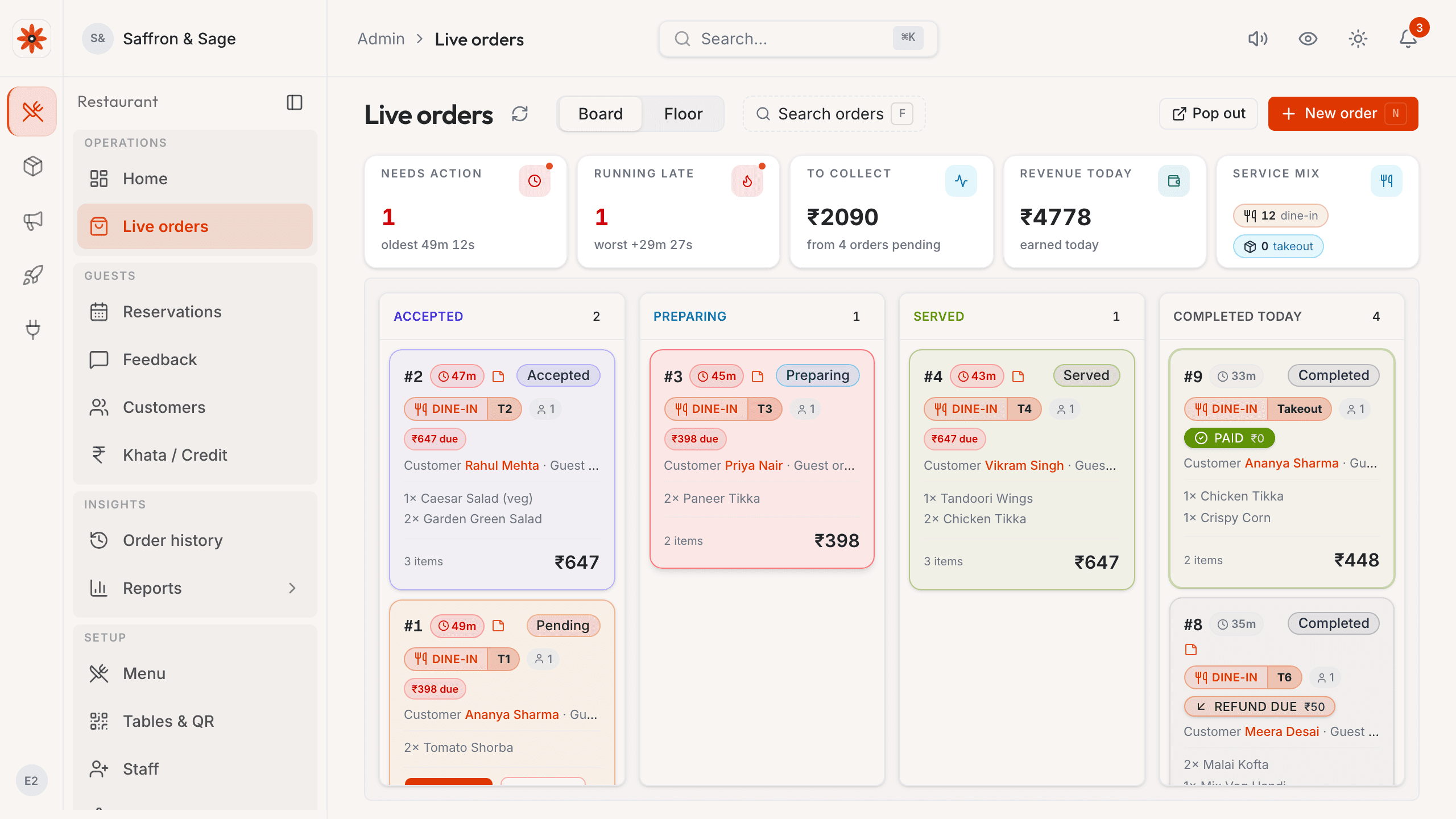
Visit eRestro
eRestro owner live orders dashboard showing restaurant orders and operational status
Private beta · macOS

Tract

Mac-native voice-to-text designed for a fast, quiet, on-device workflow. Hold a hotkey, speak, and place useful text where you are already working.

Visit Tract

Open engineering

Useful systems leave inspectable evidence.

Selected tools and workflows are public on GitHub. They are not customer or adoption claims; they are a transparent view into how we think about engineering.

Open source · GitHub

pg-flux

A public declarative PostgreSQL migration and code-generation tool.

Inspect the repository
Open source · GitHub

nex-skills

A public collection of reusable AI engineering workflow artifacts.

Inspect the repository
Open source · GitHub

NexMemory MCP

A public MCP integration artifact for memory-oriented AI workflows.

Inspect the repository

How we deliver

One connected path from unknown to operated.

The exact work changes by engagement. The responsibility does not: make decisions explicit, validate the risky parts early, and leave a system the owning team can operate.

  1. 01

    Discover

    Understand the people, workflow, evidence, systems, constraints, and reasons the work matters.

  2. 02

    Define

    Set the solution boundary, priorities, responsibilities, acceptance criteria, and key technical decisions.

  3. 03

    Design

    Prototype critical journeys, data flows, interfaces, and failure paths before implementation hardens them.

  4. 04

    Build

    Deliver working vertical slices with tests, demonstrations, reviewable decisions, and operational visibility.

  5. 05

    Validate

    Check behavior against agreed cases, security boundaries, accessibility needs, and production conditions.

  6. 06

    Operate

    Release with ownership, documentation, monitoring, recovery procedures, and a clear path for future change.

Operating principles

Build the smallest system that can be trusted.

These principles shape discovery, design reviews, architecture choices, releases, and handover.

01

Start with the decision

Every feature, model, and integration should connect to a user decision or operational responsibility.

02

Use evidence before complexity

Test the riskiest assumptions and the simplest credible approach before expanding architecture or automation.

03

Design for the operator

Normal paths, exceptions, permissions, and recovery all belong in the product experience.

04

Make risk visible

Trade-offs, unknowns, failures, and ownership should be explicit enough for the responsible team to act on them.

05

Leave a usable system

Code, controls, documentation, and operating context should transfer with the product, not remain hidden in the engagement.

Ways to work together

Match the engagement to the decision ahead.

We shape commercial terms after the responsibility boundary, dependencies, and risks are clear—never from a generic package that ignores the work.

NexG field notes

Practical thinking for teams who need to ship responsibly.

Long-form guides on AI systems, product engineering, CRM, data, growth, and the decisions that move prototypes into production.

A clear first conversation

Questions worth answering before we begin.

Need something more specific? Write to hello@nexg.tech.

NexG designs and engineers AI agents, applied AI/ML capabilities, custom software, websites, and connected CRM or business systems. The common thread is a defined user or operational problem that needs a dependable production path.

It starts with the problem, current workflow, users, evidence, constraints, and decision owners. NexG then recommends an appropriate next step, which may be focused discovery, a defined delivery project, embedded engineering, or stabilization work.

Yes. The responsibility boundary, planning rhythm, repositories, review process, and decision owners are agreed first so the additional work strengthens rather than obscures team ownership.

Timing depends on scope, unknowns, integrations, data readiness, and review availability. After discovery, the work is organized into explicit milestones and dependencies instead of a generic promise made before the system is understood.

Commercial terms follow the engagement shape, responsibility boundary, and known risks. NexG confirms scope, assumptions, what is included, and how changes are handled before delivery begins.

AI work defines allowed behavior, data and permission boundaries, representative evaluations, human review, observability, and fallback paths. The exact controls are proportional to the consequence of an error.

No. eRestro by NexG and Tract are NexG products. pg-flux, nex-skills, and NexMemory MCP are separate public engineering artifacts. Services are scoped engagements for a client's own product or operation.

Share the problem, who experiences it, the current workflow or system, the outcome you need, important constraints, and any relevant timeline. Send the note to hello@nexg.tech; sensitive credentials or private production data should not be included.

Your next system

Bring us the workflow that should work better.

Start with the users, the current operation, and the outcome you need. We’ll help you find the right delivery path.

Back to top