Guest ordering
- QR-based menu access and ordering from the guest's own device
- An ordering flow that does not depend on a server being free to take the order
- Order visibility for the guest from placement through to billing
The problem
A guest wants to order and pay without waiting for a server to be free, especially during a rush.
An order taken by hand has to be walked or called through to the kitchen, which is slow and easy to get wrong.
Kitchen and floor staff often work from different pictures of what has been ordered, what is ready, and what is still waiting.
Payment and billing rules vary by outlet and service type, and a fixed point-of-sale template does not always match how a restaurant actually operates.
Reconciling what was ordered, served, and billed is harder when that information is not held in one place.
Approach
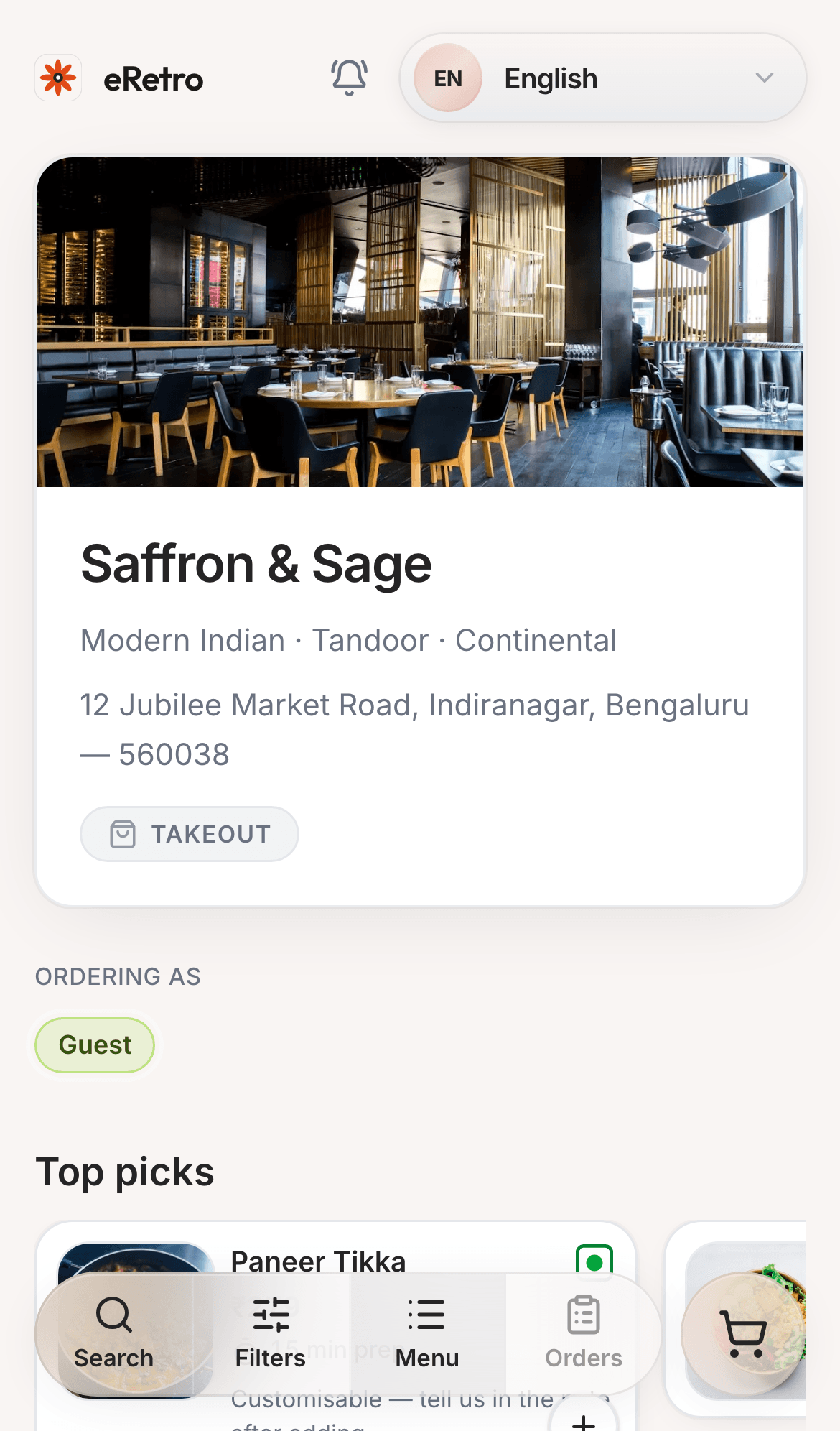
eRestro puts a QR-based ordering interface on the table so a guest can browse the menu and place an order directly from their own device, without waiting for a server to take it down.
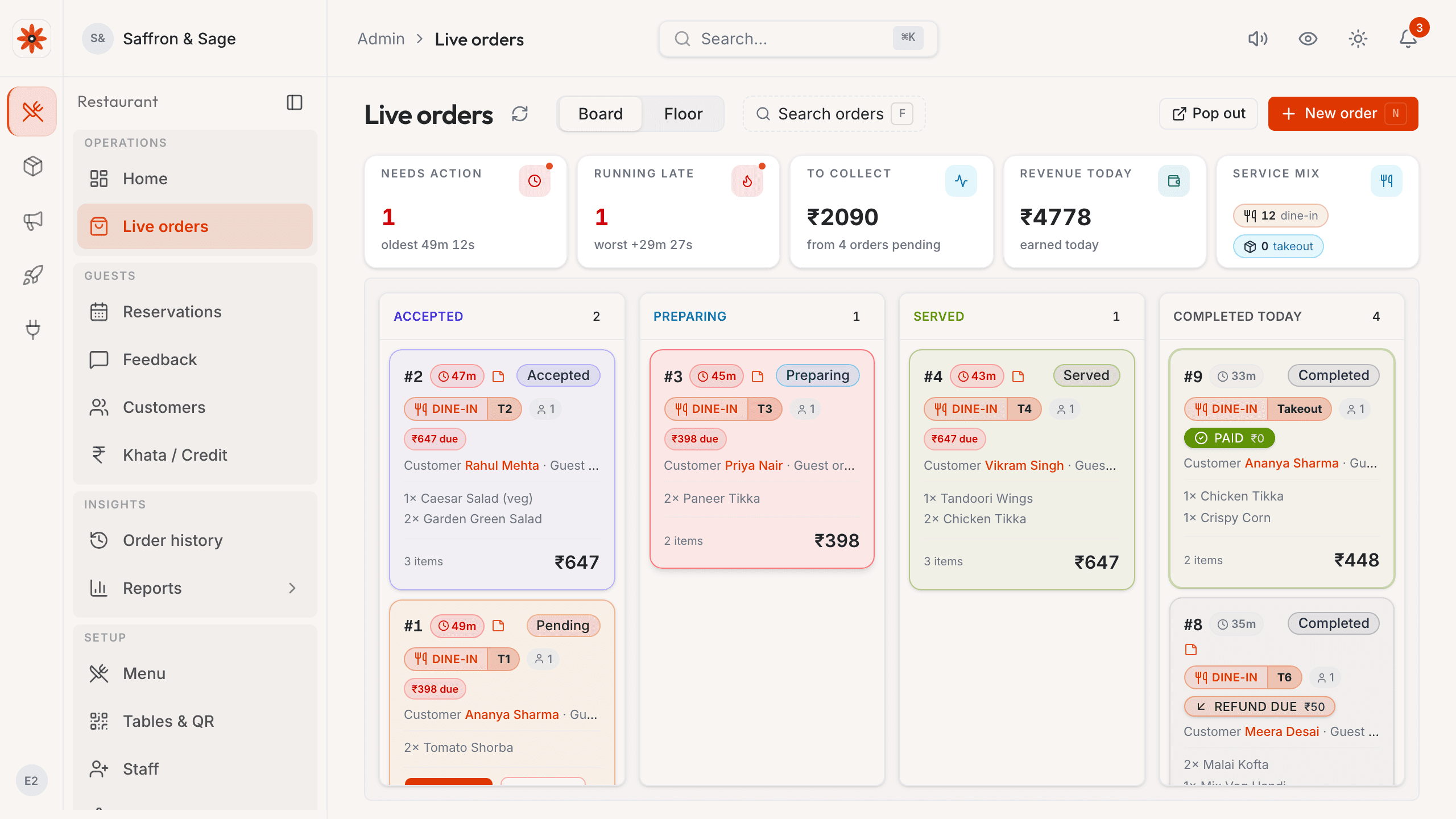
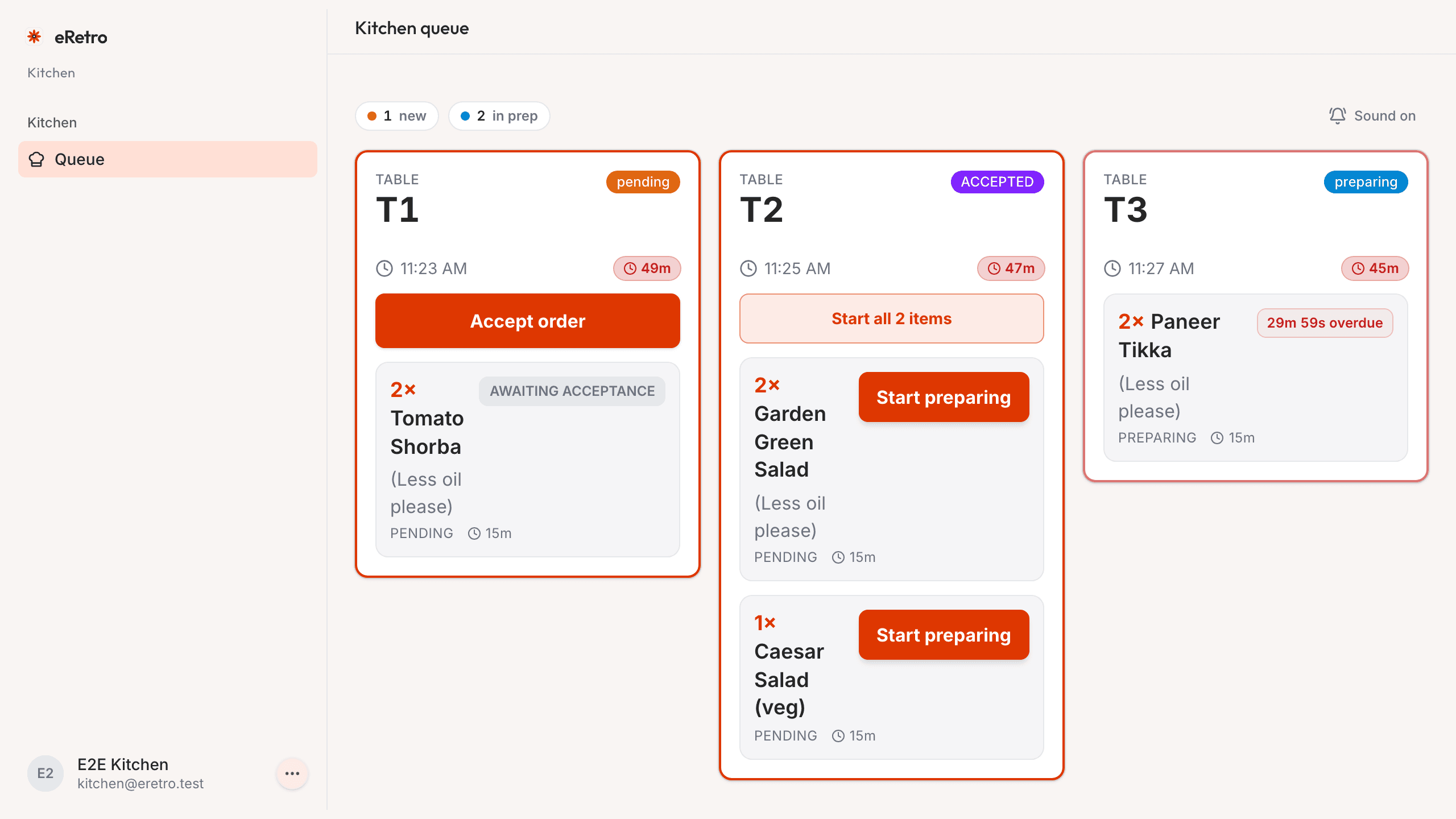
That order is routed into a shared kitchen and floor view, so preparation and service can be coordinated from the same information instead of a verbal handoff.
Payment is built around UPI, which is what most guests in India already reach for.
Billing is configurable per outlet, so charges, taxes, and billing rules can match how the restaurant actually operates instead of a fixed template.
How it works
A guest scans the table's QR code, browses the menu, and places an order from their own device.
The order becomes visible to kitchen and floor staff together, coordinating preparation and service without a manual handoff.
Payment runs through a UPI flow, matching how most guests already prefer to pay.
Charges, taxes, and billing rules are configured per outlet.
Features
Fit
Gallery
Questions
The things people check before asking for a number.
Ordering is QR-based: a guest scans the code at the table and orders from their own device. Full interface and onboarding detail is maintained on the eRestro website.
Orders placed by a guest are visible to kitchen and floor staff from the same order information, rather than depending on someone walking or calling in the ticket.
Payment runs through a UPI flow, in line with how most guests in India already prefer to pay at a restaurant.
Yes. An outlet sets up its own charges, taxes, and billing rules; nothing is fixed at the platform level.
The eRestro website (https://erestro.in) is the live product and the current source of truth for feature availability, onboarding, and pricing.
Get a quotation
Share the workflow, users, and constraints you're working with. We'll follow up with a scoped quotation.